 VERILUME
B2B Research & Lead Generation
Cold Email Is Decided Before You Write the First Line
The subject line gets the attention, but the list, the reason for contact and the follow-up plan do much of the work. Here is what to settle before sending.
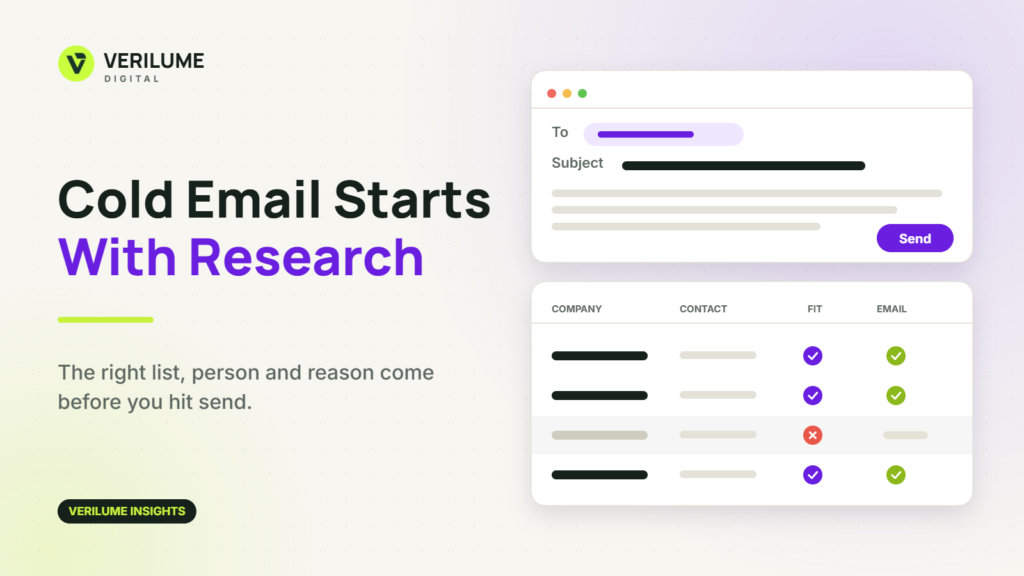
When a cold email gets no reply, the first instinct is usually to rewrite the subject line. Sometimes that helps. More often the problem started earlier: the wrong company, the wrong person or no clear reason for writing at all.
Outreach is easier to improve when you treat the email as the last step of a research process rather than the whole of it.
Start with a list that fits
An email can only be relevant if the recipient is. That depends on the quality of the prospect research behind it: whether the company matches your target market, whether it is still active and whether it plausibly has the problem you solve.
A smaller list of companies you have actually checked will usually serve you better than a large export that nobody has reviewed. If you are still defining who belongs on the list, our article on building a B2B prospect list without buying a database is a good place to start.
Find the right person for the offer
Sending an offer to the highest-ranking name available is not the same as sending it to the person who cares. A marketing service may belong with a marketing lead or a founder. A data service may belong with an operations manager.
Contact research is the work of matching the person to the reason for writing. Where a direct address cannot be found or reasonably verified, a relevant general business address can still be a sensible option. A blank field is better than a guess that bounces.
Check the addresses before sending
Sending to addresses that no longer exist harms deliverability and wastes the effort that went into the message. Data validation before a campaign removes obvious errors, duplicates and formatting problems, and makes later results easier to read.
Have one specific reason to write
The strongest cold emails usually contain a single observation that shows the sender looked: something about the company’s services, its market, its website or a recent change. It does not need to be elaborate. A sentence that could be sent to any company is easy to ignore.
Keep the message short, say plainly what you do, and make the next step small. Asking whether a short conversation would be useful is easier to answer than asking for a meeting next week.
Send responsibly
Follow the email rules that apply to the markets you contact. In many places that means identifying yourself accurately, using a real reply address and honouring requests to stop receiving messages. Start with small batches so you can see what is happening before sending more.
Honest, relevant outreach protects the sender’s reputation as well as the recipient’s inbox.
Plan the follow-up before the first send
Many replies arrive after a gentle second or third message, so decide in advance how many follow-ups you will send, how long you will wait and what each one adds. A follow-up that offers a fresh, useful point is better than one that only asks whether the first email was seen.
Judge the campaign by conversations, not opens
Open rates are an unreliable signal. Replies, qualified conversations and the reasons prospects gave for saying no are far more useful. Record them next to the list so the next round of research is sharper.
Write for a phone screen
Many business emails are read quickly on a phone. Short paragraphs, plain words and a single clear question are easier to take in than a long introduction. If the message needs scrolling before the point appears, it can usually be shortened.
Read the draft aloud before sending. If it sounds like a mass message, rewrite the opening around the one thing you noticed about that company.
Keep a record of who has been contacted
Outreach gets messy quickly when several people send messages or when the same company appears under different names. Keep one record of who was contacted, when, with which message and what happened next.
That record prevents embarrassing double contact, makes follow-ups easier to time and ensures that anyone who asks to stop hearing from you is not contacted again.
If you want research that sets up outreach properly, you can read more about our cold email outreach support, or tell Verilume Digital about your target market when you request a quote.